


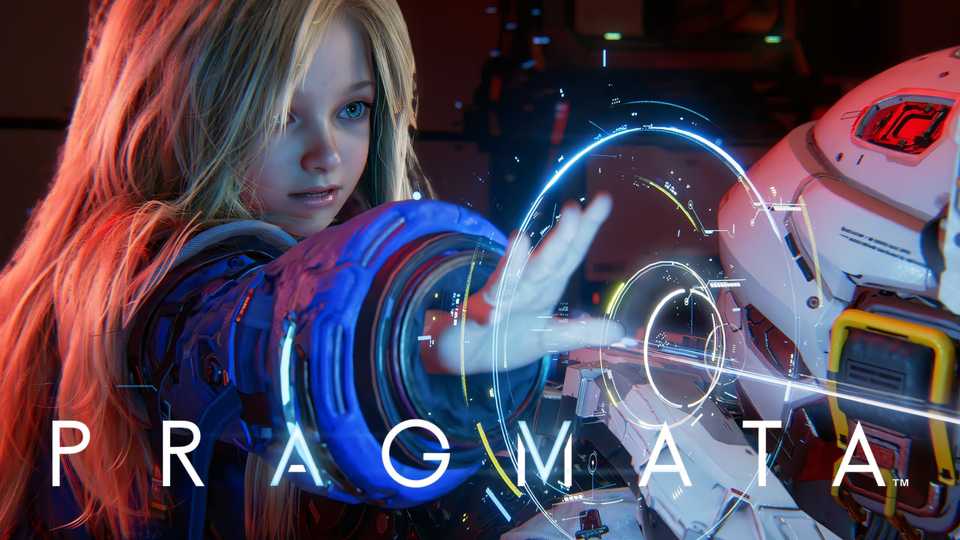
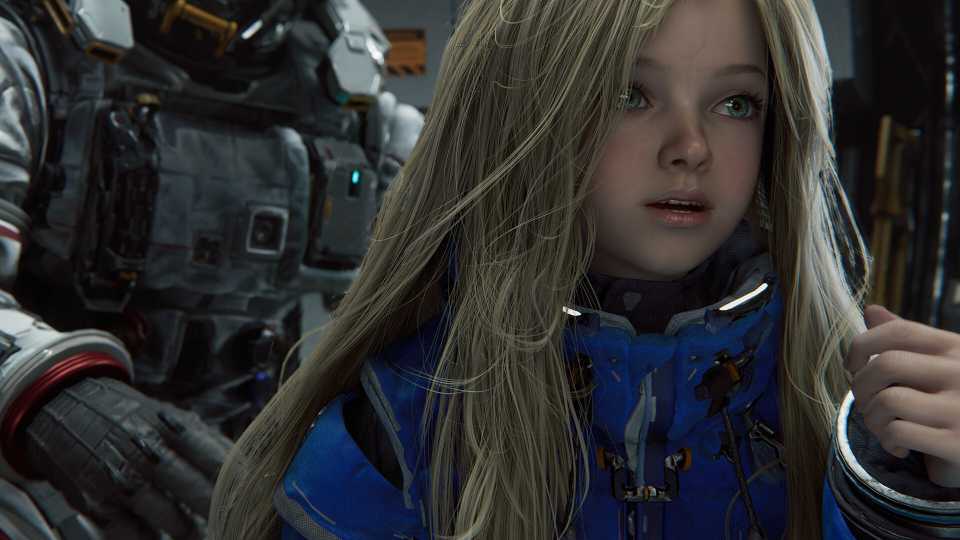
There is an elegant piano motif that plays whenever stranded astronaut Hugh Williams and little girl android Diana high-five in Capcom’s Pragmata. A few delicate notes accompany this growing bond between man and machine, designed to showcase the saccharine warmth at the centre of this occasionally uneven yet undeniably beautiful tale. A promise that, even in the darkest of circumstances, there is an inherent value to shared connection and a reason to keep on moving forward.
While it would be easy to describe Pragmata as a third-person shooter where you hack into 3D-printed robots before blowing them to pieces with all manner of space guns — it totally is that, by the way — its true achievement is how it contextualises so much of this action, along with the exploration of a sprawling space station, through the relationship between two spectacular lead characters.
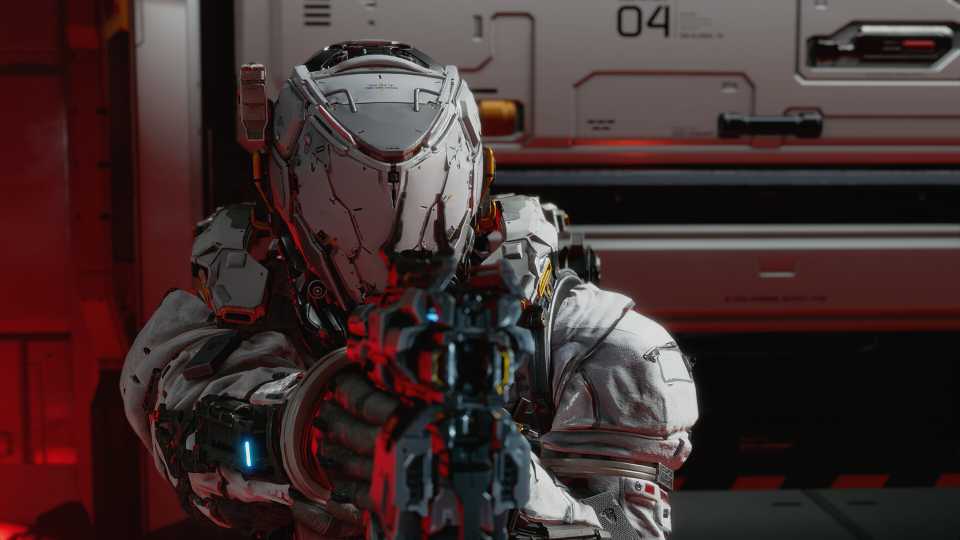
Hugh Williams is an astronaut on a routine mission who loses his crew and awakens to find a precocious young girl slapping him in the face before repairing his broken suit. From there, it’s off to the races as you discover what brought this grandiose complex to its knees and how, if at all, you might escape it.
Ground Control To Major Capcom
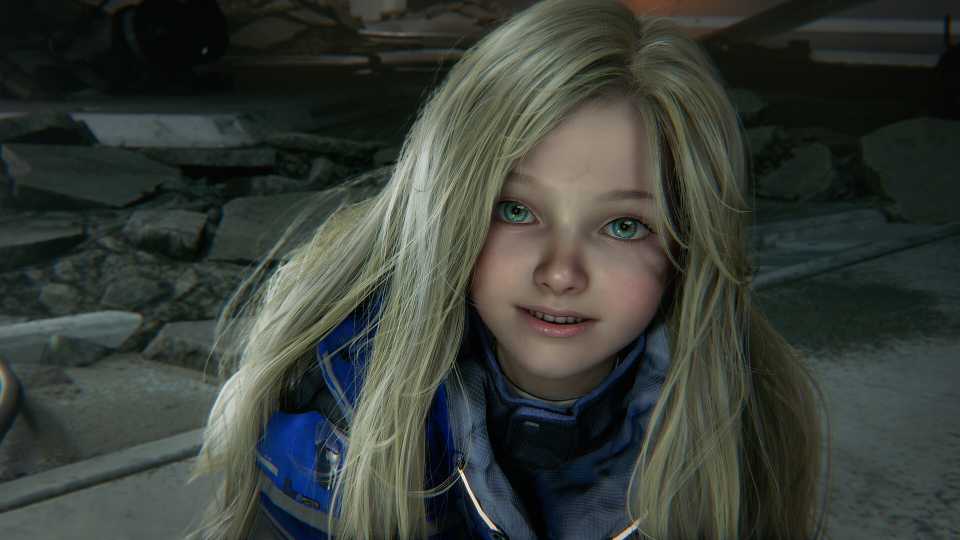
On the surface, Hugh is a somewhat milquetoast protagonist. His backstory is sketched only lightly beyond the fact that he was raised as an orphan and harbours an unorthodox view on family dynamics. It doesn’t matter who you are, where you come from, or whether you’re a highly advanced android that looks and acts like a real human — you deserve to be heard, cared for, and valued. So when Hugh stumbles upon adorable android Diana, he immediately vows to protect her and get both of them home before the space station succumbs to its own corruption.
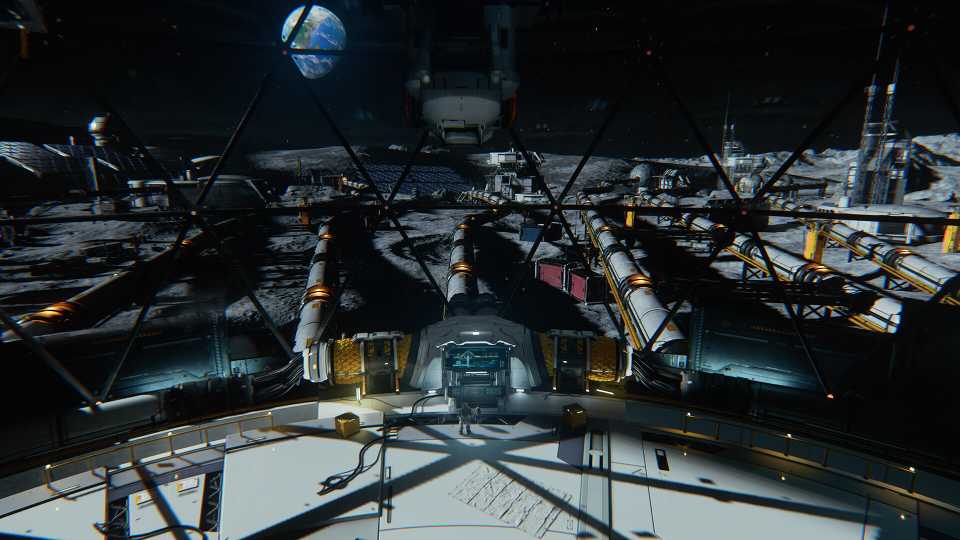
The Delphi Corporation has created a vast facility on the moon that is experimenting with a new substance known as Lunafilament. It allows scientists to recreate entire cities, including one particular stunning level set in New York’s Times Square, or strive to replicate the biodiversity found on Earth in the form of sandy beaches and thick forests. One day, this may be key to settling humanity on other planets. It can even recreate human beings, albeit with limited capacity, thanks to lacking personality constructs and the inability of androids to fully adopt the thoughts and feelings of those who inspired them.
This would also delve too deep into spoiler territory if I explained things further, but Diana was designed by her creators to replicate the behaviour and appearance of a specific child in the real world, hence why she reacts to everything around her with curious wonder.

Capcom is evidently critiquing the role that Generative AI has come to play in our everyday lives, and how even if we create something beautiful in a matter of seconds with advanced technology, does it really mean anything if it has no soul? Diary entries throughout the story reflect this dilemma, with Delphi employees questioning whether what they are creating has actual value or whether it is morally right to try and bring back something — or someone — we might have already lost.
I won’t delve much further due to obvious spoilers, but there are a number of poignant moments throughout Pragmata that ask big questions about what the true nature of Hugh and Diana’s relationship really is. In some places it lacks depth, especially when it comes to Hugh’s backstory and a rushed final act, but I still felt emotionally invested at each and every turn. Even if his own life is forfeit, Hugh wants Diana to step foot on a real beach instead of the digitised pixels strewn across harsh metallic simulations.
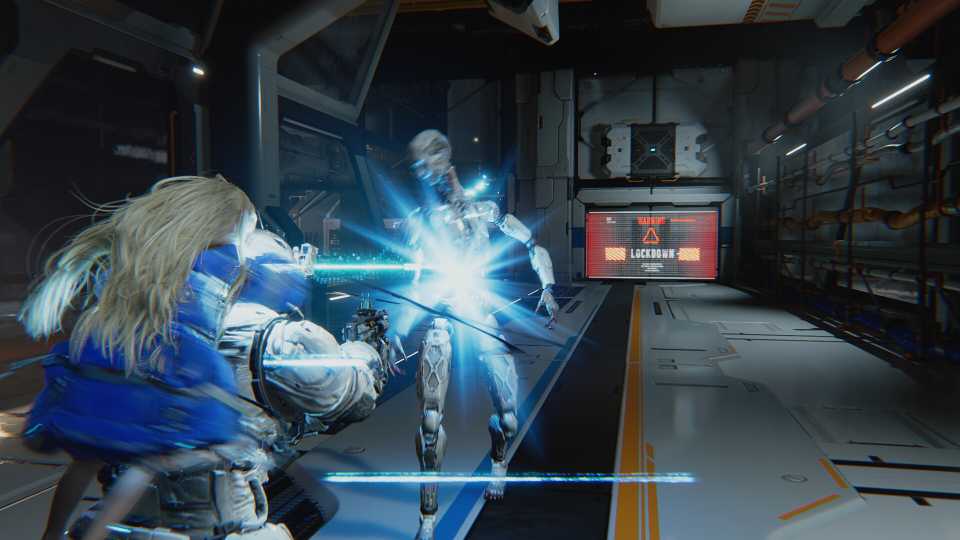
I’ll touch more on character dynamics and the overall narrative impact later, but for now, let us switch gears to talk about Pragmata’s excellent combat system. On the surface, it moves and shoots like Vanquish meets Gears of War, but the ability for Diana to hack into enemies simultaneously adds an extra layer of strategy I’ve never seen a game like this attempt before.
Hackers Gonna Hack

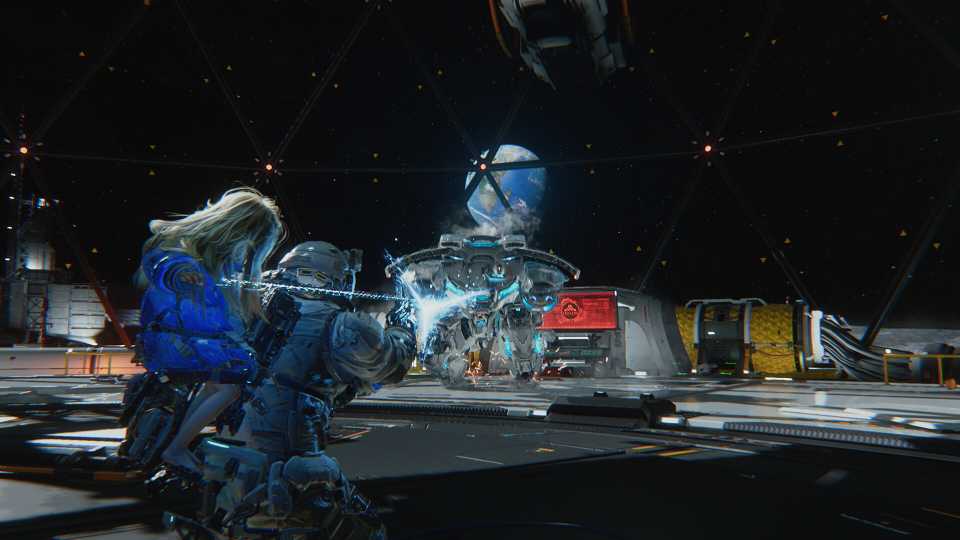
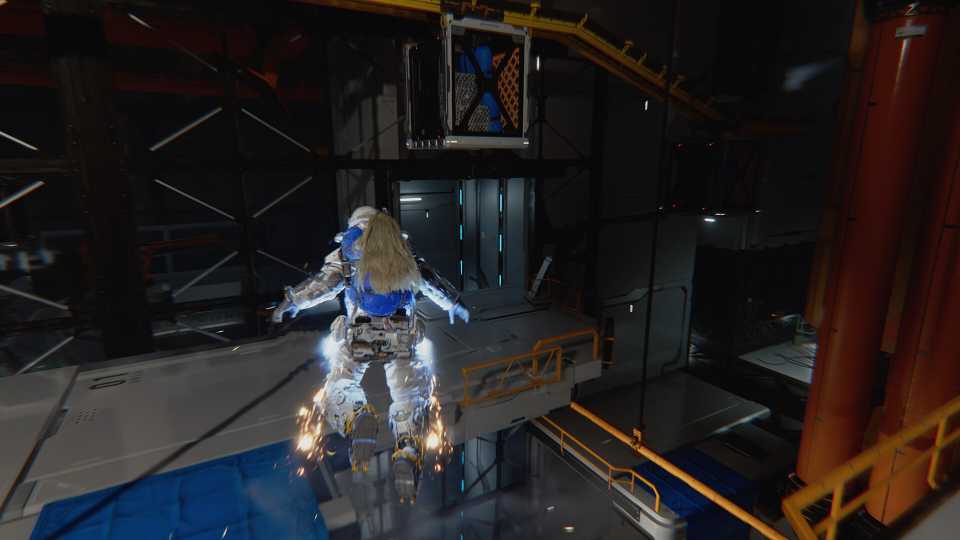
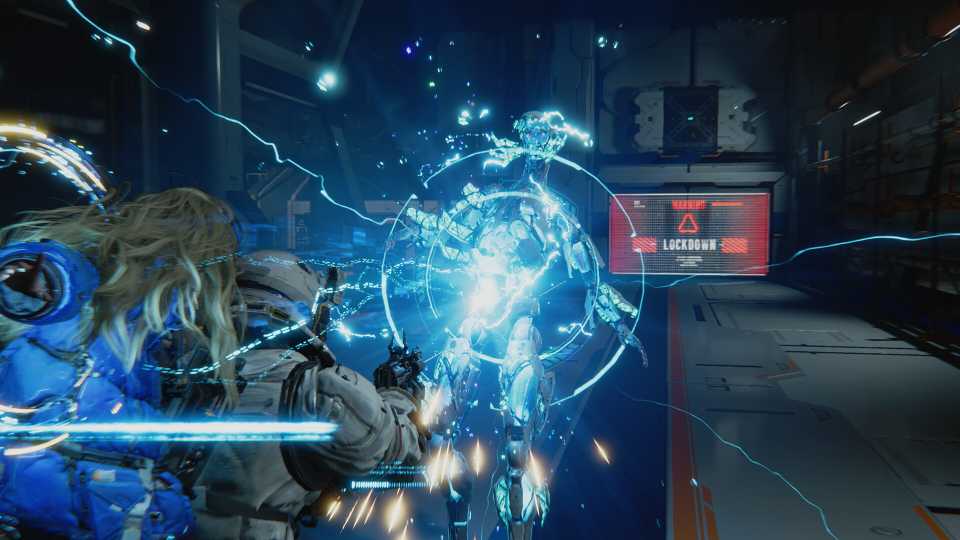
Whenever you aim at an enemy in Pragmata, all of which are various forms of humanoid or insectoid robots, a hacking grid will appear on the right-hand side of the screen. Your goal is to use the face buttons to move in the direction of a green objective marker and avoid any hazards that crop up along the way. Hit the objective, and robots will burst open to reveal their weak points, but consequently become more powerful and aggressive. You need to act fast and capitalise on these weak points by unleashing as much damage as possible, all while using Hugh’s thrusters to dodge around the environment and make sure you’re taking into account other threats.
Hacking modifiers and playstyles allow you to deliver programmes that speed up the time it takes to overheat certain enemies or even turn them against each other in battle. While you can get by using the same strategy over and over again in most encounters, I loved many of the rewards that came from experimentation, seeing how my foes reacted to very specific weapons and hacking combos.

Speaking of weapons, Hugh is spoiled for choice regarding badass space guns. Your standard firearm is a pretty harmless pistol, but it never runs out of ammo and is perfect for getting out of a tight situation. This go-to is supplemented by missile launchers, impactful shotguns, laser rifles, and a slew of supportive weapons that trap robots in digital nets or summon swarms of turrets that distract hostiles from above while you keep hacking.
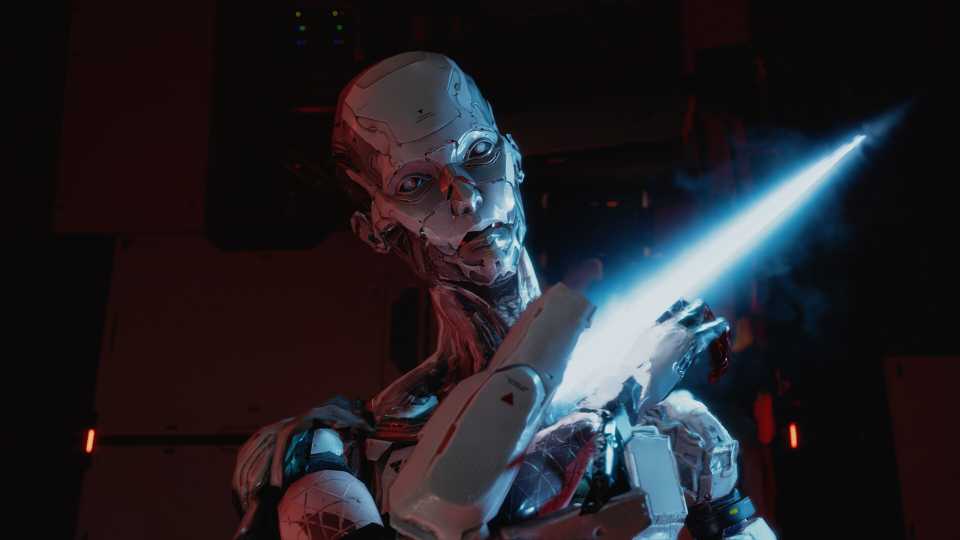
Bosses are a particular highlight. These towering behemoths are not only terrifying to look at, but increase the scale of combat arenas while challenging you to think outside the box.
I kept comparing combat to Resident Evil Requiem, and how much more accomplished it can feel in terms of enemy design, player movement, and the staggering amount of mechanical options available to me in most scenarios. I could push each of its gameplay systems much further, not to mention how much strategy I’d need to consider on harder difficulties or when tackling a load of optional challenge missions available in the Shelter. What’s that, you ask? Let’s get right into it.
I’ll Give Them Shelter Like You’ve Done For Me

Pragmata is upfront about the fact that it wants to be cute and schmaltzy. The relationship Hugh and Diana develop over time is sickeningly sweet, with our charming astronaut taking on the role of a doting father with untold enthusiasm. While much of this chemistry comes to life naturally through moment-to-moment dialogue, it’s the Shelter that allows you to fill the place with toys for Diana to play with, have casual conversations, or engage in a game of Hide and Seek.
Acting as a comfortable hub area you can return to whenever you find a fast travel point in the game world or die to an enemy, the Shelter can be filled with holograms designed to be facsimiles of Diana’s bedroom, a lounge filled with toys, a camp in the woods, or a beach on which you can build sandcastles. It’s not uncommon to load back into the Shelter and watch as Diana learns to use a skateboard or fires a water pistol at you from behind cover, as lots of adorable animations play out. It’s really, really cute, so much so that I’m convinced Japan is working with Capcom to try and increase the country’s birthrate with this thing.

Elsewhere in the shelter, you can engage in a spot of bingo using unique coins, change into different outfits, switch up your loadout before a mission, and so much more. It feels like a menu has been turned into a physical space you can interact with that constantly grows in sophistication throughout the 10–12 hour campaign. Hugh emphasises the fact that even if he and Diana are trying to make it out of this horrible place alive first and foremost, she still deserves a space to be a kid for the first time.
If your heart doesn’t melt when Diana hands you one of the drawings she has worked hard on, you might want to check if it’s still beating.
But the Shelter also goes a little too hard on its own sentimentality at a certain point, and as a consequence, reveals glaring holes in the overall narrative about why Hugh cares so dearly about Diana beyond the human instinct to nurture, and how this little girl came to be beyond a handful of audio logs and diaries spewing out exposition in the final few hours.

The fact you’re still sold on this relationship in spite of these shortcomings is a true achievement, though. I couldn’t hold back tears as the final act let all the disparate pieces fall into place, showing us that triple-A tales about fathers and daughters needn’t be defined by untold loss and bloodshed. It feels like an antidote to so many similar games in recent years, and it isn’t afraid to experiment with combat, exploration, and dialogue in ways that walk an awfully delicate line between cheesy cringe and heartwarming sincerity.
As Capcom’s first new IP in several decades, there is a lot riding on Pragmata to succeed, which is why I’m pleasantly surprised by the amount of narrative and mechanical risks it is willing to take. It wants you to question how it feels to play a modern shooter and engage with a familial story that games like The Last of Us and God of War have already done to death by asking big questions of its characters and trusting you to experiment with unique combat mechanics never before seen in the genre. It’s got big ambitions, a big heart, and two big and beautiful characters leading the charge on an intergalactic adventure like no other. Cheese and cliché aside, Pragmata is a rare triumph.






 OpenCritic Reviews





- Engine
- RE Engine
- Genre(s)
- Action, Adventure, Science Fiction, Third-Person Shooter
- The relationship of Hugh and Diana is strong, relatable, and filled with heart
- Combat encourages strategic thinking and experimentation in equal measure
- The game world is filled with familiar space imagery and plentiful surprises
- An incredible soundtrack that expresses the peripheral melancholy with ease
- I wanted the core narrative to go deeper on certain themes and characters
- The camera can prove a little unreliable in tighter combat arenas