
Daily news, dev blogs, and stories from Game Developer straight to your inbox
Hades devs: accidentally inventing a subgenre was 'surreal'
Did the gods themselves play a role in the success of the Hades series?
3 Min Read
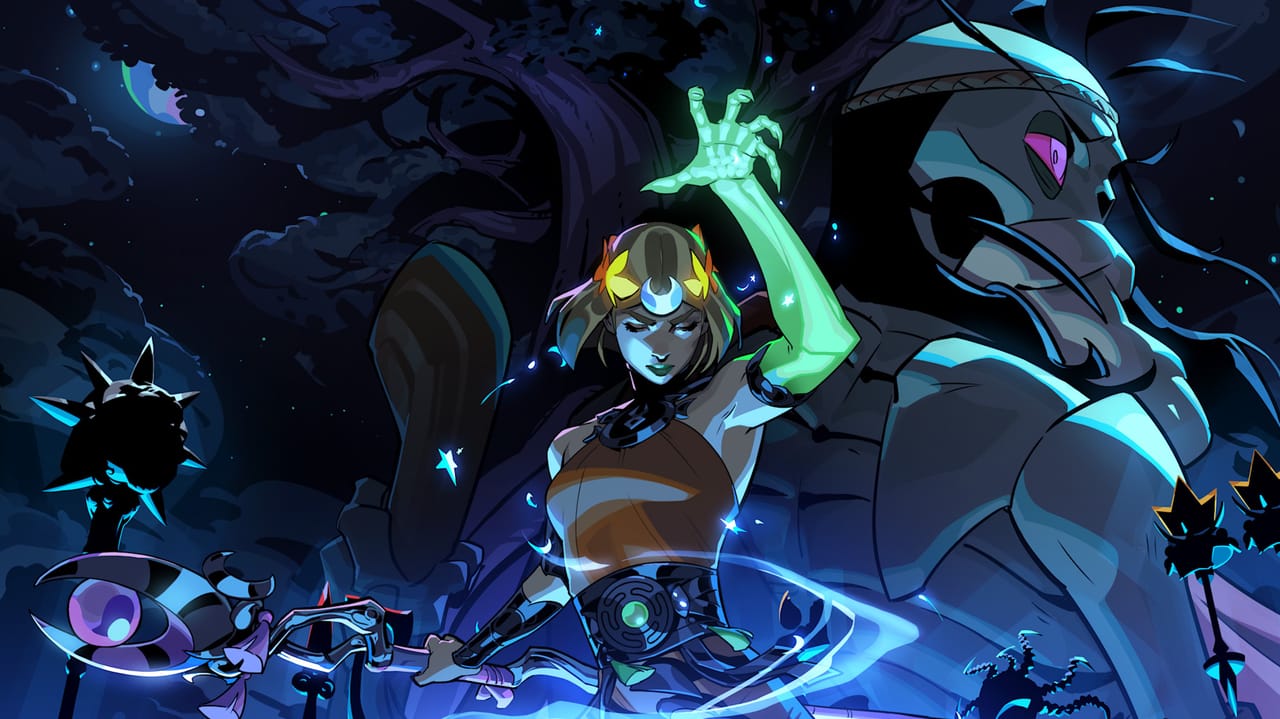
Image via Supergiant Games
The evolution of subgenres in game development is a fascinating topic. What is the alchemy that makes one game a hit, and the other a mass inspiration?
The developers who make such games certainly don't have all the answers. At the 2026 DICE Awards, we asked Supergiant Games' Greg Kasavin and Amir Rao (fresh off of winning the "Best Action Game" award for Hades II) about the experience of watching Hades become such an inspirational text for other independent developers. Not only did the game sell over a million copies, but its approach to run-based storytelling, area-based upgrades, and character design have become essential for games like Spiritfall, Curse of the Dead Gods, and Sworn, just to name a few. The phrase "Hades-like" is now a jumping off point for a certain subcategory in the roguelike genre.
"It was really surreal for us," said Kasavin when asked about the phenomenon. "When we were making Hades, we thought we were simply making a roguelike. We were playing games like Dead Cells and Slay the Spire and were just making a game in that genre."
Hades didn't invent the roguelike genre (that would obviously be Rogue, with Rogue Legacy being a major modern point of inspiration), but it offered developers a narrative framework that not only unlocked potential storytelling opportunities, but helped shape the flow and pace of general gameplay. The "home base" area that players return to between runs acts as a hub for storytelling and signifying progression, and the loop of "clear encounter, meet character, receive reward from said character, rinse and repeat" is a replicable structure that doesn't require a cast of Classical Greek gods to lean on.
Did the aforementioned gods grant Supergiant Games some form of boon to make this possible? "I did not discount that as a possibility," joked Kasavin. But luckily for the rest of the game development world, you don't need an oracle to understand the path to Supergiant's success
Gods ain't gonna help you son
Kasavin and Rao both shared a more pertinent sentiment about the process of making Hades and Hades II—that they and their peers at Supergiant treated the game as being "their own spin" on an existing genre, not an effort to reinvent the medium.
Rao observed that when it comes to genre definitions, that conversation took place entirely after Hades left Early Access, and that it was determined entirely by popular reception. It wasn't something that could be planned or even controlled. "That's just a part of a reception and conversation at a time where we're not part of the conversation anymore."
"It's almost in some respects like some of the stuff we did with Bastion," said Kasavin, alluding to Supergiant's first game. Bastion was an isometric hack-and-slash game elevated by the voice of narrator Logan Cunningham, who provided running commentary on the player's actions while unspooling a story of a world wracked by calamity. The highly-polished gameplay was built on familiar principles, but Cunningham's voice, the sharp storytelling, and artist Jen Zee's clear perspective catapulted the game—and its makers—into history.
"We thought there was kind of a niche we could carve out for ourselves, like infusing it with more narrative, making it a little bit more forgiving," Kasavin said when recalling the making of Hades. "It succeeded beyond our wildest expectations, to the point where we suddenly realize people are talking about it like it's this kind of subgenre."
"That's how that stuff happens sometimes right? We had no clue whatsoever—we didn't think we were doing anything innovative at the time."
"There was no other way we could make this game," Rao added. "We just made the decisions that felt right and natural to us."